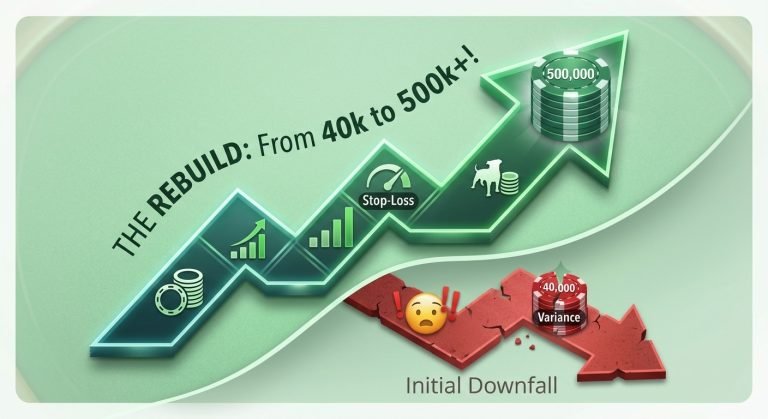


You had 200,000 chips an hour ago. Now you’re staring at a balance that’s barely enough to sit at a low table, wondering exactly which hand it all went wrong on. The truth is, most people don’t lose their chips because of one unlucky hand. They lose them because of a chain of small decisions that felt fine in the moment. Chip management in Zynga Poker isn’t about playing perfect poker. It’s about protecting your balance so a rough patch doesn’t turn into an empty stack.
How Fast Can a Chip Stack Actually Disappear?
A big number on your screen can feel safe, even when it isn’t. The problem is that chip stacks tend to drop in sudden chunks, usually from a handful of oversized bets. If you have 100,000 chips and sit at a table where a few hands can cost you 20,000 or 30,000 chips each, it takes only three or four bad hands to wipe you out. Compare that to a table where the average hand costs a few thousand chips, and suddenly one bad beat doesn’t threaten your whole session.

Stop Playing Every Single Hand
New and returning players often fall into the same trap. This means that they treat every hand as worth seeing. It feels more exciting, and folding can feel like wasting a seat at the table. But playing too many hands is one of the fastest ways to drain chips without ever hitting one big loss. Every hand you play costs something, even if you fold later on. Ante, blinds, and small calls add up fast when you’re involved in hand after hand. A player who plays 70% of hands will almost always lose more chips than one who plays 20–25% and picks their spots over the long session. A few habits that can help with this are;
- Fold weak starting hands quickly instead of “seeing what happens”
- Treat strong hands with more patience, not more hands overall
- Notice if you’re playing out of boredom rather than a real opportunity
- Remind yourself that folding costs nothing

Think Twice Before Going All-In
Going all-in can feel like the most thrilling moment in Zynga Poker, and sometimes it’s the right move. The problem is when it becomes a habit instead of a decision. An all-in bet puts your entire remaining stack on the line in a single hand. Even a strong hand can lose, and when it does, the damage is immediate and total. You can ask yourself a few questions before committing everything;
- Is this hand genuinely strong, or does it just feel good right now?
- Am I making this decision because of the cards, or because I’m frustrated or excited?
- If I lose this hand, what does my session look like afterward?
For example, a player sitting on 100,000 chips who goes all-in and loses is instantly back to zero at that table. The same player risking 15,000–20,000 on a strong hand can absorb a loss and still have plenty left to keep playing smart.
Set a Chip Budget Before You Sit Down
Bankroll management sounds like a serious poker term, but for Zynga Poker it really just means making a decision. You can try out this approach for making decisions:
- Decide on a “session budget,” such as 10–20% of your total balance.
- Play using only that amount, treating the rest as untouched.
- If you lose the session budget, stop playing at that stake for the day.
- If you’re winning, consider setting aside a portion of the profit rather than risking it all back.
This kind of limit does something important. It helps you decide out of the heat of the moment. A budget set beforehand protects you from that version of yourself.

Pick Tables That Actually Match Your Balance
One of the quietest ways players lose their chips is by sitting at tables that are simply too big for their current stack. But if a single bad hand can cost 30–40% of your balance, you’re one hand away from a serious setback no matter how well you play. A reasonable habit many experienced players follow is only sitting at tables where a full buy-in represents a small slice of their total chips, not a large one. That way, even a losing session leaves enough to try again without needing to reload. Matching your table to your balance isn’t about playing scared. It’s about giving yourself enough room to make good decisions instead of desperate ones.
Learn to Spot Tilt Before It Spots You
“Tilt” is a poker term for playing based on emotion instead of strategy. It can usually be frustration or sometimes overconfidence after a big win. It’s one of the biggest reasons players lose chips faster than usual, because decisions start being driven by feelings rather than the actual hand in front of them. Some common signs of tilt include:
- Playing hands faster than usual, without really thinking them through
- Feeling the urge to “punish” the table after a bad beat
- Increasing bet sizes suddenly, without a clear reason
- Feeling more irritated or impatient than normal
- Playing more hands than you normally would
Recognizing these signs in yourself is more useful than any specific strategy tip. If you notice two or three of them happening at once, that’s usually a signal to step back for a few minutes rather than keep playing through it.

Know When to Walk Away
Stopping at the right time is one of the most underrated skills in Zynga Poker. Plenty of players know good strategy but still lose chips because they simply don’t stop when they should. A few natural stopping points to consider:
- You’ve hit your pre-set session budget
- You’ve noticed signs of tilt in your own play
- You’ve won a solid amount and don’t want to risk giving it all back
- You’re playing out of habit rather than genuine interest in the game
Keep Your Chips Ready for the Next Session
Even with careful chip management, every player runs into rough sessions. Cards go cold, a few hands don’t go your way, and the balance takes a hit despite playing sensibly. That’s a normal part of the game, not a sign you’re doing something wrong.
When that happens, having a reliable way to top up your Zynga Poker chips means you’re not stuck waiting around or forced into playing at tables below where you’d like to be. This is where PrimePokerChips.com comes in. It’s a straightforward option for players who want to replenish their chip balance and get back to the tables they actually enjoy, without changing how they play or expecting any guaranteed outcome from it.
Buying chips won’t fix bad habits at the table. Good chip management still does the heavy lifting. But for players who’ve already applied the strategies above and simply need to rebuild a balance, PrimePokerChips.com offers a simple way to get back in the game.
FAQs
1. How do I stop losing chips in Zynga Poker?
Focus on the decisions that cause the biggest losses: playing too many hands, going all-in too often, and chasing losses after a bad beat. Setting a session budget and choosing tables that match your balance are the two changes that tend to make the biggest difference.
2. How can I protect my Zynga Poker chips?
Protecting your chip balance mostly comes down to limiting how much you risk on any single hand and avoiding tables where one loss can wipe out a large percentage of your stack. Stepping away after a set budget is reached also protects your remaining chips from tilt-driven decisions.
3. Why do I keep losing chips in Zynga Poker?
Consistent chip losses are usually caused by a pattern rather than bad luck alone — commonly playing too many hands, over-using all-in bets, or continuing to play through frustration after a loss. Reviewing your recent sessions honestly often reveals the habit that’s costing the most.
4. How many chips should I risk at a poker table?
Many players use a rough guideline of keeping a table buy-in to a small portion of their total balance, so a losing session doesn’t require an immediate reload. The exact number depends on personal comfort, but avoiding tables where a single hand can seriously damage your stack is the key idea.
5. When should I leave a poker table?
Good times to leave include reaching your pre-set session budget, noticing signs of tilt like frustration or rushed decisions, or after a strong win you don’t want to risk giving back. Playing without a clear reason to continue is usually a sign it’s time for a break.
6. How do I stop chasing losses in Zynga Poker?
The most effective approach is recognizing the urge as it happens and deliberately slowing down rather than increasing your bets. Taking a short break after a big loss, instead of immediately trying to win it back, prevents one loss from turning into several.
7. Is it normal to lose a lot of chips quickly in Zynga Poker?
Chip balances can drop fast at higher-stakes tables or during a run of tough hands, and this happens to experienced players too. What matters more than any single rough session is having habits in place — like budgeting and table selection — that prevent it from becoming a full wipeout.
8. Can buying more chips help me win more in Zynga Poker?
Buying chips replenishes your balance so you can keep playing, but it doesn’t influence the cards or guarantee winning hands. Chip management and decision-making at the table remain what actually determines results over time.