
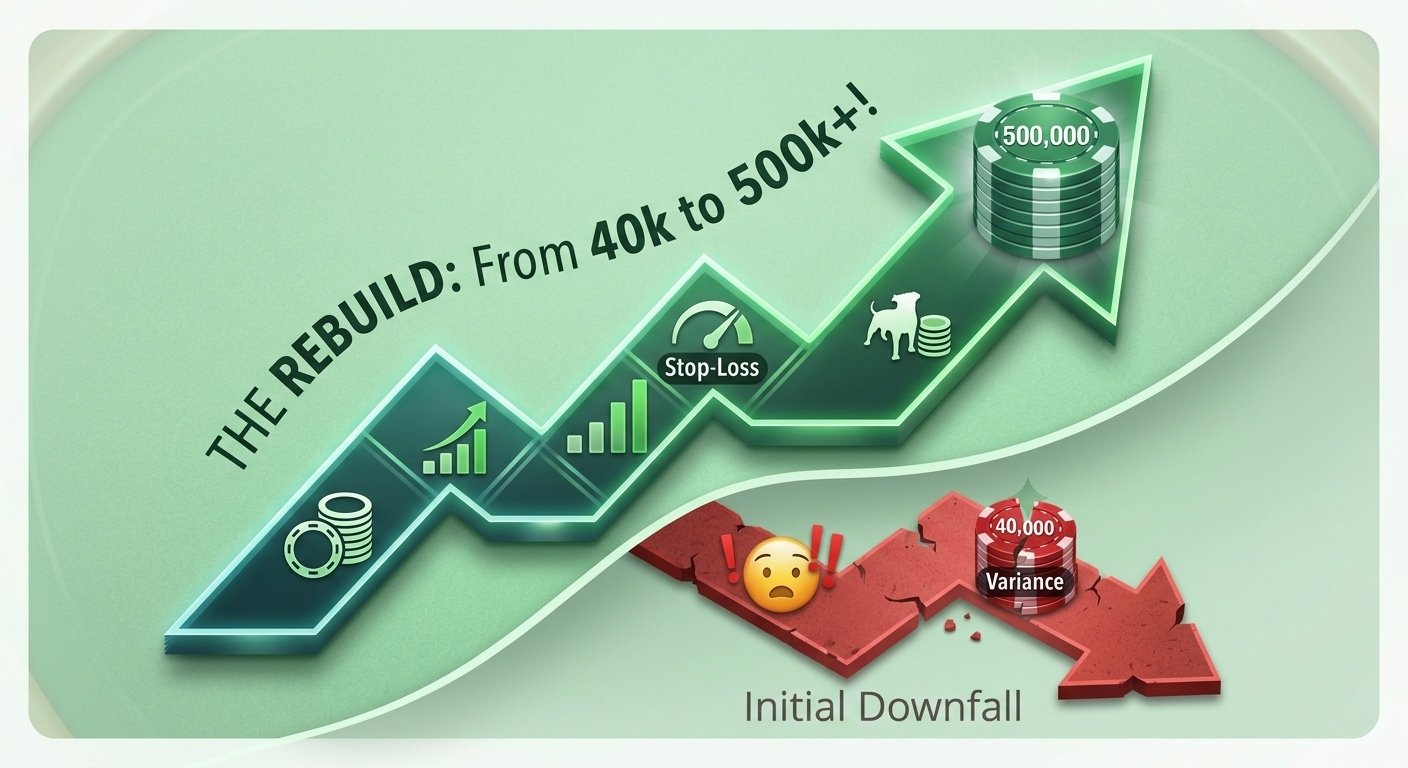

You just got 500,000 free chips when you signed up for Zynga Poker. Two hours later, you’re down to 40,000 and wondering what happened. This is one of the most common ways new players get discouraged. The chips feel unlimited at first, so it’s tempting to sit at the biggest table available and see what happens. A couple of good hands feel great. Then one big pot goes the wrong way, and half your balance is gone in a single hand.
None of this means you played poker badly in the traditional sense. It usually means the bankroll behind your decisions wasn’t matched to the table you chose. That gap is exactly what causes most beginners to burn through their chips fast, then feel stuck once the balance runs low. The good news is that fixing it doesn’t require getting better at reading opponents or memorizing odds charts. It mostly comes down to a handful of habits around table selection, bet sizing, and knowing when to step back.
Why Does Your Chip Balance Drop Faster?
Zynga Poker uses play chips instead of real money, which makes it easy to treat them casually. But the math of bankroll management doesn’t care whether the chips are real cash or virtual currency. If you regularly risk a large slice of your balance on single hands, variance will eventually catch up.
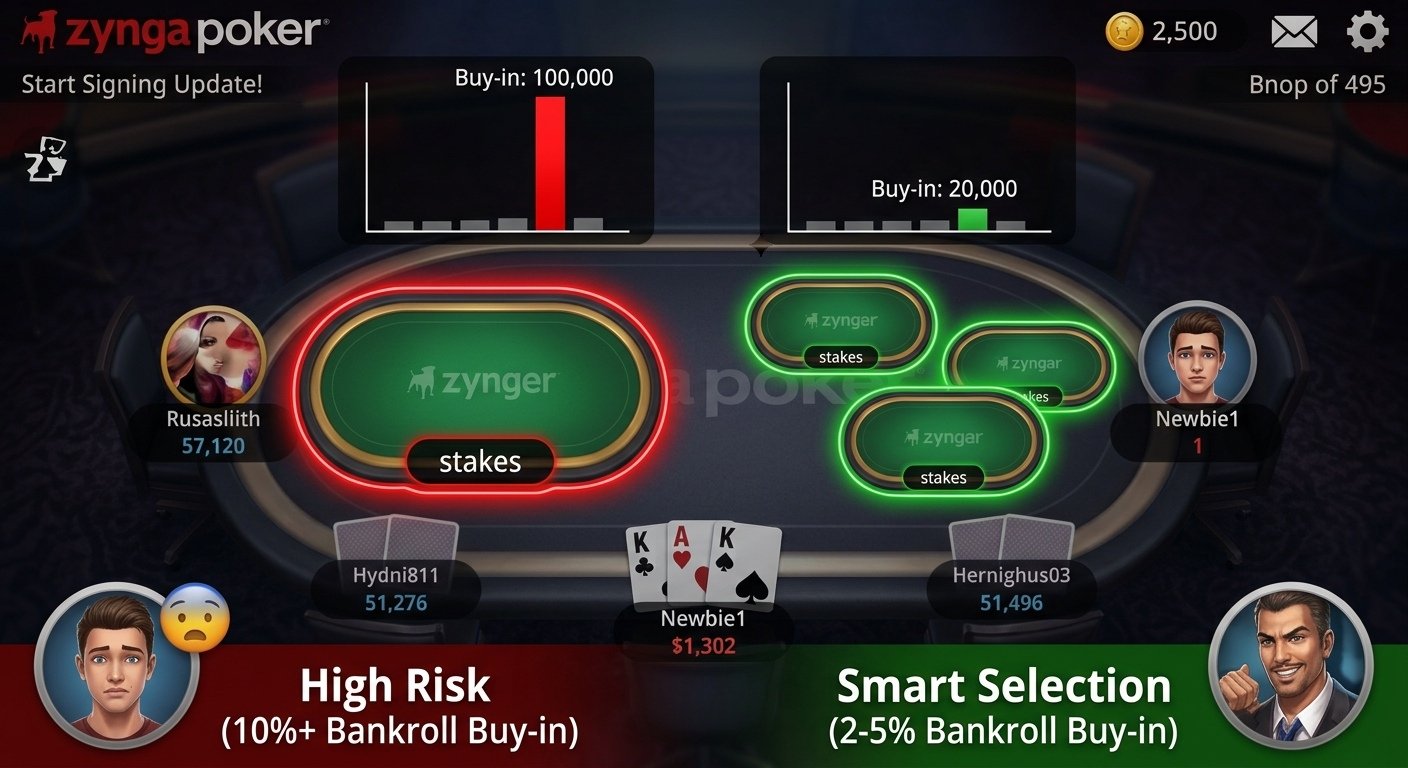
A player with 1,000,000 chips who sits at a table with a 100,000-chip buy-in is putting 10% of their entire bankroll on the table at once. Lose two buy-ins in a row from bad beats or a cold run of cards, and that player has already burned 20% of their total balance in one sitting. Compare that to a player with the same 1,000,000 chips who buys in for 20,000 at a smaller table. A rough two-hour session might cost them one or two buy-ins, which is a much smaller dent. They can absorb a losing streak and keep playing without needing to rebuild from scratch. Neither player is necessarily worse at poker. The second one is just harder to knock out.
Affordable Tables to Start
A common early mistake is choosing a table based on how big the pots look rather than how it fits your current balance. A more sustainable approach is to treat your table selection like a budget decision, not just a game choice.
A few practical guidelines include:
- Look for a buy-in that’s roughly 2–5% of your total chip balance, not 10% or more.
- If you’re testing a new table, sit at the low end of that range first.
- Move down a level immediately if a table feels consistently more aggressive than your stack can handle.
- Don’t chase a table just because a friend or club member is playing there.
This isn’t about avoiding fun tables forever. It’s about giving yourself enough room to survive a rough patch of cards without your whole balance being on the line every time you sit down.

How Much of Your Chip Bankroll Should You Risk Per Hand?
Table selection controls your overall exposure, but bet sizing controls it hand by hand. Even at a well-chosen table, oversized bets can undo the benefit of picking the right stakes.
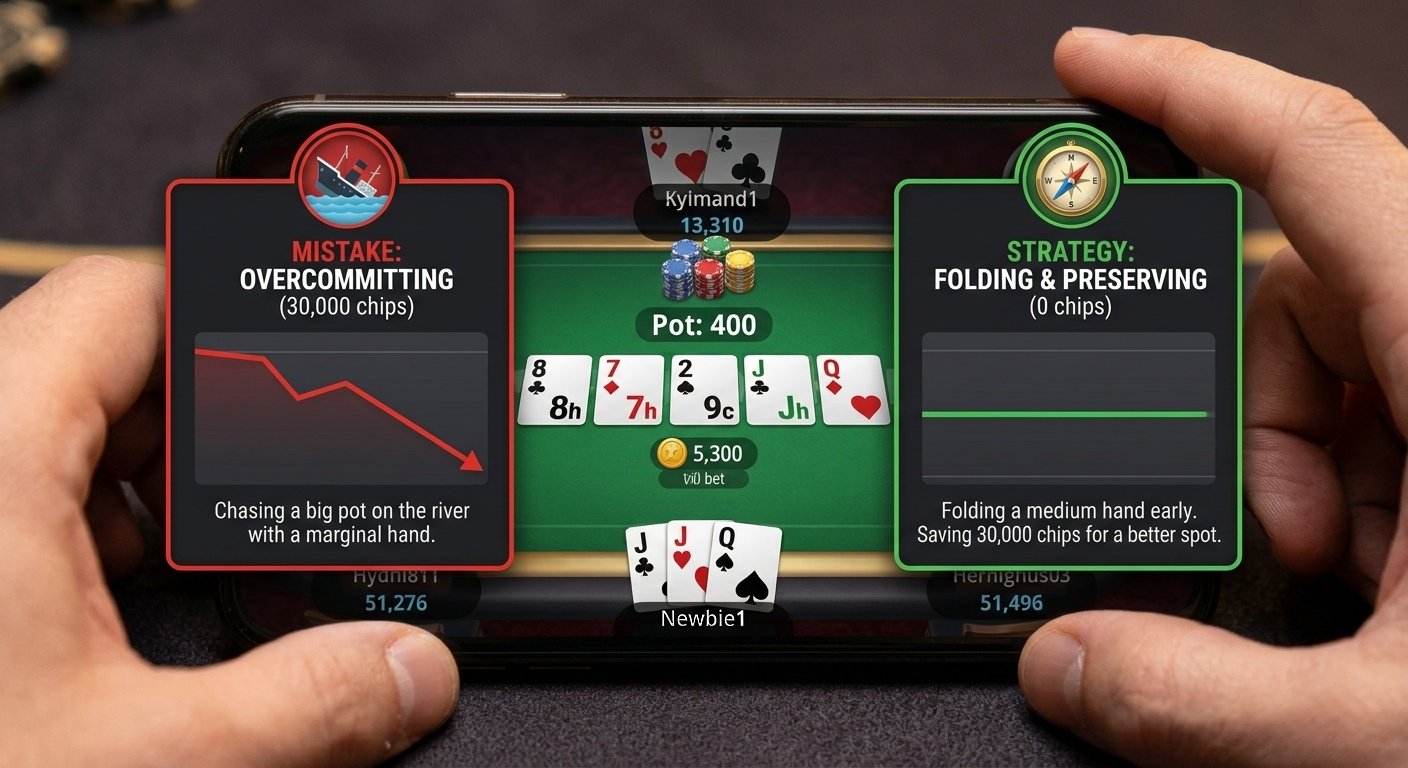
A useful mental checkpoint before you raise big: would losing this hand still leave you in a comfortable position at this table? If a single bet would wipe out more than a quarter of your stack at that table, it’s worth pausing before committing it, especially with a hand that isn’t clearly strong.
This matters even more in the later stages of a hand. Beginners often play cautiously pre-flop, then get pulled into a big pot on the river because they’ve already invested chips and don’t want to “waste” them by folding. That instinct is understandable, but it’s also how a manageable loss turns into a table-ending one.
|
Poor sizing |
Better sizing |
|
A player with 60,000 chips at the table pushes 25,000 into a pot on a medium-strength hand, hoping to scare opponents out |
The same player raises in smaller, more controlled increments. |
| If it doesn’t work, they’re left with barely enough to play another hand at that table. |
This keeps enough chips behind to still make decisions later in the hand and in future hands at that table. |
The second approach doesn’t guarantee a win. It does mean one bad read doesn’t end the session.
Common Bankroll Mistakes That Drain Chips Fast
Most bankroll problems come down to a short list of repeated habits rather than bad luck. Recognizing them early makes them easier to correct.
- A couple of good hands can make a table that’s actually too expensive feel affordable.
- Trying to win back a big loss in one hand at the same table usually leads to a bigger loss.
- Playing with a short stack relative to the blinds limits your options and forces weaker decisions.
- Folding a marginal hand costs nothing. Playing it out of boredom can cost a lot.
- Without checking in on your overall balance occasionally, it’s easy to not notice a slow, steady decline.
None of these require advanced strategy to fix. They mostly require slowing down before committing chips.

How to Build Your Zynga Poker Chip Balance Slowly
Growing a bankroll in Zynga Poker isn’t about one big score. It’s closer to compounding small edges over many sessions. A few approaches that tend to work better than swinging for big pots:
- Play tighter at unfamiliar tables. Fewer hands played means fewer opportunities to lose chips while you’re still reading how the table behaves.
- Take daily bonuses and rewards seriously. These add to your balance without any risk attached, and they add up over weeks.
- Set a stop-loss for each session. Decide in advance how much you’re willing to lose at one sitting, and actually leave when you hit it.
- Bank a portion of wins. After a good session, consider moving back down a table or two rather than immediately reinvesting everything at a higher stake.
- Play more hands at lower stakes rather than fewer hands at higher ones. Volume at a level you can afford builds experience and balance at the same time.
This approach is slower and less dramatic than hoping for a big hand to double your stack. It’s also far more likely to leave you with a bigger balance six months from now.
When Should You Move to Higher-Stakes Tables?
Winning a few hands in a row can feel like proof you’re ready for bigger tables. But most often it’s just a normal hot streak that has more to do with the cards than a jump in skill. A more reliable signal than a single good session is consistency over time. If your balance has grown steadily across multiple sessions at your current stakes, and you can comfortably absorb a losing streak at the next level up without risking your whole bankroll, that’s a reasonable point to test higher stakes.
It helps to move up gradually rather than jumping several levels at once. Try the new table with a smaller portion of your balance first. If it consistently feels too fast or too aggressive, there’s no downside to dropping back down. The blinds and betting pace will still be there once your bankroll has grown further.
What to Do After a Bad Losing Streak?
Losing streaks happen to every player, and they don’t always mean anything is wrong with how you’re playing. What matters more is how you respond to one.
A few things worth doing after a rough stretch:
- Step away from that table for a while, even if it’s just for the rest of the session.
- Avoid moving up in stakes to “make it back faster.” This is one of the fastest ways to turn a moderate loss into a serious one.
- Review a few of the hands that went badly. Sometimes it’s just variance. Sometimes there’s a pattern, like consistently overcommitting on marginal hands.
- Drop back to a smaller table for a session or two to rebuild confidence and balance at a lower-risk pace.
The goal isn’t to avoid losing streaks altogether, since that’s not realistic in poker. It’s to make sure one bad stretch doesn’t force you out of the game entirely.
How Extra Zynga Poker Chips Can Help You Get Back Into the Game
For players who’d rather keep playing at the stakes they’re used to instead of waiting through a slow rebuild, PrimePokerChips offers Zynga Poker chips for purchase. It’s a straightforward way to top up a balance that’s run low after a tough session, without changing anything about how you actually play.
FAQs
1. How much of my chip bankroll should I risk at one Zynga Poker table?
A common approach is to keep your buy-in at around 2–5% of your total chip balance. This lets you handle a losing session or two without putting your entire bankroll at risk. If a table’s buy-in is closer to 10% or more of your balance, it’s usually too big for where your bankroll currently stands.
2. Why do I keep losing chips quickly in Zynga Poker?
The most common cause is playing at tables or making bets that are too large relative to your current balance. Chasing losses, moving up in stakes after a lucky streak, and playing too many marginal hands also drain a bankroll faster than normal variance alone would.
3. When should I move up to higher-stakes tables in Zynga Poker?
Look for steady growth in your balance across several sessions rather than a single good run of hands. If you can move up and still comfortably absorb a losing streak at the new stakes without risking most of your bankroll, that’s a reasonable time to try it.
4. What should I do after a big losing streak in Zynga Poker?
Step away from that table, avoid moving up in stakes to try to win it back quickly, and consider dropping to a smaller table for a session or two. This gives your bankroll room to recover without adding more pressure to every hand you play.
5. Is buying Zynga Poker chips a good idea if I run out?
It can be a practical option if you’d rather keep playing at your usual stakes instead of rebuilding slowly from a small balance. Sites like PrimePokerChips.com sell Zynga Poker chips for this purpose. Buying chips restores your balance, but it doesn’t improve your odds, so bankroll habits still matter afterward.
6. How can I build my Zynga Poker chip balance without spending money?
Play consistently at tables sized appropriately for your balance, take advantage of daily bonuses and in-game rewards, and set a stop-loss for each session so a bad run doesn’t erase your progress. Growth tends to come from steady, lower-risk play rather than one big hand.